
Return on Energy in the Age of AI
For the past couple of years, it's been hard to find advice or an article that isn't about AI. Of course, we are going through a revolution, and a lot of changes have occurred and will occur. Even if the tech companies offering AI were to cease improving the models, we are just at the beginning of discovering how AI can be used (and governed) to help us in business and in everyday life. The Internet today looks very different than it did in the late '90s, and likewise, we've yet to envision AI 2.0 (see Tim O'Reilly's What Is Web 2.0).
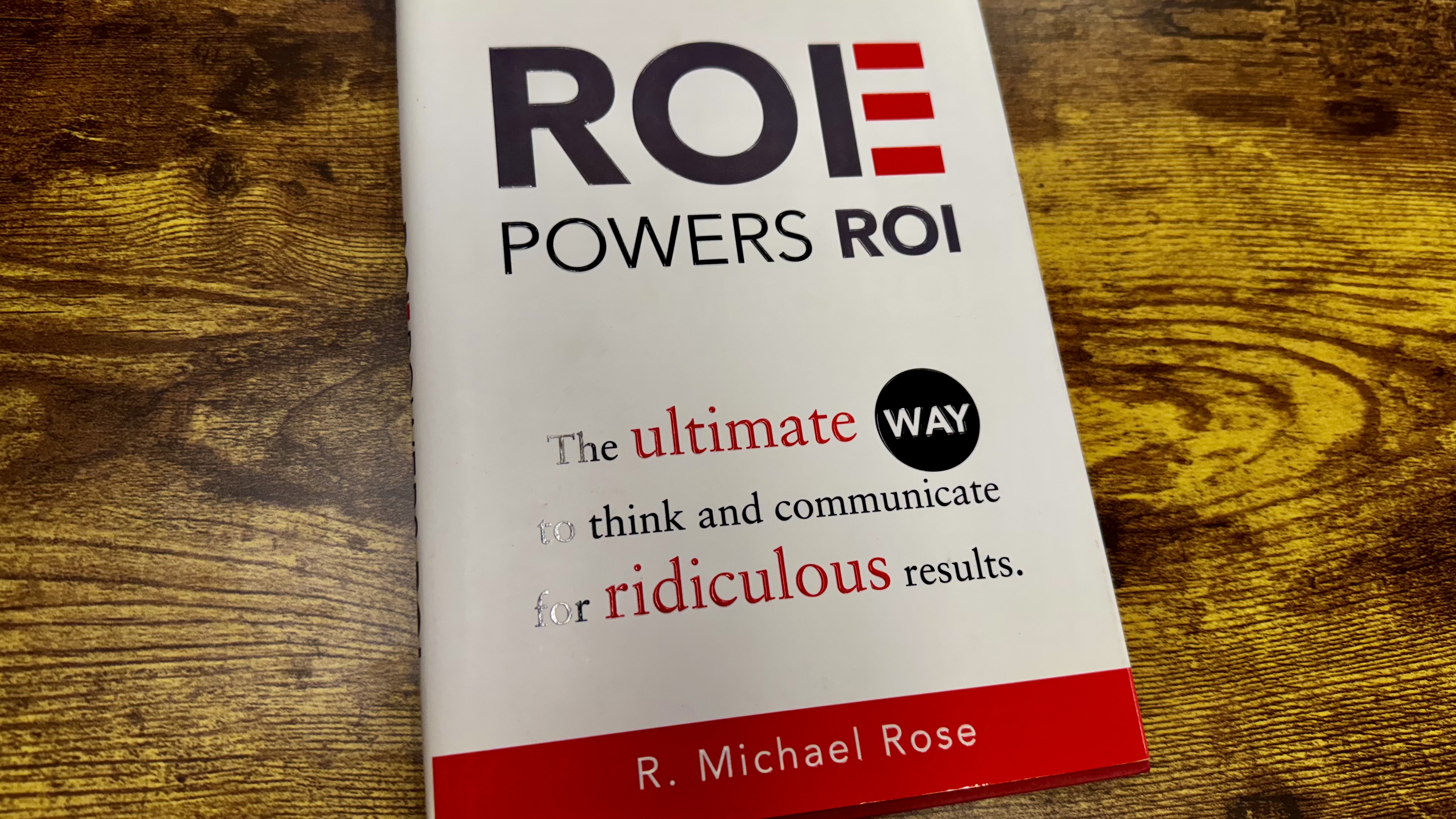
So to kick off a series that revisits ideas and principles that risk getting lost in the shuffle, I wanted to begin with ROE Powers ROI by R. Michael Rose.
ROE Powers ROI
ROE stands for Return on Energy, and the title is the thesis that the return on your investment depends on the return you get from the energy your people put in. Rose describes the two as a positive feedback loop, where an increase in one increases the other, and he gives the old saying a twist, "If, as the saying goes, time is money, then ROE is time".
So where does the energy go? Rose's answer is that a lot of it is wasted when people talk past each other. He asks you to imagine a ship in the era of exploration. The captain can say, "I want to sail beyond that horizon", but he can't make the trip alone. He needs a navigator to plot the course and a first mate to command the crew. If the navigator doesn't understand the vision, or the crew is disgruntled, the ship goes off course no matter how hard everyone is working. ROE is his method for keeping the ship on course, and it rests on three seats that he calls the Ways:
- Way One provides the vision. This is the "Chief Vision Officer", the why. The vision is broad and long-term, and you can't measure where the finish line is. For example, Henry Ford wanted to "democratize the automobile", which is a vision and not a sales target.
- Way Two creates the strategy. This is the "VP of Vision", the how. The Way Two takes that rough sketch and turns it into a plan that is specific, measurable, attainable, results-oriented, and time-bound (SMART). In Rose's words, "A plan bridges idea to action".
- Way Three carries out the tactics. This is the "Vision Coordinator", the what. The Way Three seat is "where plan meets reality".
Idea -> plan -> action. Rose is careful to say that a Way is a seat and not a rank ("It is not hierarchical, nor is it a virtual caste system"). A Way comes from the role you are playing at the moment, and nobody is stuck in one. The trouble starts when people communicate in the wrong Way. A meeting where everyone is thinking like a Way One starts with one idea and ends with five ideas and no plan. A Way One who assumes the strategizing is happening, without ever delivering the idea with expectations, leaves the Way Twos with no idea what their next step is. All of that is energy spent with nothing to show for it.
If this sounds self-evident, Rose agrees with you. He compares it to the arrow in the FedEx logo, which most people don't see until it's pointed out, and after that they can't not see it (if you're not aware of the arrow, see "Hidden designs in famous logos"). "Sometimes we miss the most obvious things in our quest for unnecessary complexity". The value of the framework isn't that vision, strategy, and tactics are new ideas. It's that once you know which seat you are sitting in, and which seat the person across the table is sitting in, you can tell when the two of you aren't speaking the same language.
He also has a warning for anyone who has to sit in more than one seat, as those of us in small companies do, that "it's one thing to multitask, but you can't think in two Ways at the same time. It would be like running in two directions at once—you just end up running in circles".
My Experience
I first read the book when I had my first company, Troubadour Research. I was of course the "Chief Vision Officer" (Way One) but I also had my own tasks that I needed to complete, since we were still small enough that everyone had to wear many hats. To be clear, I wasn't trying to think in two Ways at the same time, which is what Rose warns against. I was sitting in two different seats on the same initiative. What I found was that I could play Way One and Way Three (the coordinator), but not two adjacent roles. The reason is that if you are the visionary and the strategist, as you start charting the course as strategist, it's easy, maybe natural, to second-guess the vision. There will be challenges to overcome in developing the plan and the path forward and you really need to power through, having been given a directive from the visionary.
On the other hand, I found that I could play the role of the Way Three because I had delegated the Way Two role to other team members, so they could in turn hold me accountable. But as with the One-and-Two combination, if you are acting as Two and Three, you can fall into the trap of second-guessing the plan.
The Age of AI
So what does this mean in the age of AI? There's an obvious lesson that you need multiple people involved. Accountability was the biggest benefit I got from the framework. Can the AI hold you accountable? I think some will argue that it can, but I'd say that it really couldn't do a better job than a to-do list; it might be better at putting certain tasks in front of you, but that's visibility, not accountability.
Way Three is the obvious first place to introduce AI. It's the implementation seat, so we're talking about automation. Rose saw this coming:
The job of those who sit in a Way Three seat is not simply to perform some mindless task. If there's not a machine or app for such a task, there will be before you get done reading this book.
The "mindless tasks" get automated, but the seat doesn't go away. He goes on to call the people in the Way Three seats the ones "fueling the entire business", because that seat is where the plan meets reality and somebody has to adapt when the plan doesn't survive it.
That matches my own experience. I use AI a lot. It helps me clarify the vision, craft a plan, maintain the to-do lists, and implement the tasks. But I don't think it has replaced any of the lessons from the book.
If anything, AI has made one of those lessons harder to follow; that is, keeping the seats separate requires a new level of discipline. With AI, one person can do the work of all three seats, which means more switching between the Ways, not less. And the old trap is still there where I'm second-guessing the vision while I'm planning, or second-guessing the plan while implementing.
Moving up a seat, I have not experienced an AI that can take on the (Way Two) planning with no human in the loop. Of course, it can create as many documents and tasks as you want. But as I wrote in an earlier post, quantity is the easy part with AI and quality is the hard part. A plan is no exception, so the decisions it makes along the way should always be scrutinized. Enter the Way Two human. Once again, the AI can't hold you accountable, but somebody has to hold it accountable.
And I would argue that the Way One vision needs to continue to come from the visionary human. AI can help me clarify the vision, but it can't be the source of it.
What Still Holds
AI is changing the landscape, and I don't want to understate that. But a changing landscape is exactly when it is easiest to lose sight of what we had already learned. Rose wasn't writing about AI, and his framework still holds up when I apply it to the way I work with AI now.
What the framework shows is that any initiative needs a visionary, a strategist, and an implementer, and that each of those seats needs a human operator. Ideally that is more than one human, because the accountability comes from having someone else in the seat next to yours. AI can help the person in every seat, and it helps me in all three. It has not, in my experience, been able to sit in one.
That is the idea behind this series. The discourse around AI moves fast, and, in the rush, it is easy to forget what came before, or to assume it no longer applies. In the posts that follow, I'll revisit other principles and pieces of wisdom that I think are worth holding onto, and ask the same question of each one: does it survive contact with AI?